I believe, whatever doesn’t kill you simply makes you… stranger.
—Joker, The Dark Knight
When I first began drafting this piece,1 the results of the 2026 midterm election in the United States had not been released, and I had originally planned to begin with a sentence like “Liberalism has seen better days.” After all, the question of liberalism has become relevant, and recent elections in Peru, Colombia, and the first round of the presidential election in Brazil, all of which resulted in victories for extremely controversial right-wing candidates, made me apprehensive that something of the modern human subject was rejecting the sobriety and safety of liberalism. But the statement that liberalism has seen better days inevitably led me to ask what those times were, and whether there was ever a time when liberalism was not imperiled by forces that saw it as a threat. Late eighteenth-century monarchism threatened it (if we dare to call the American colonies “liberal”); early nineteenth-century reactionaries threatened it. The middle- to late-nineteenth-century realities of racial and imperial domination threatened it; twentieth-century nationalism, fascism, and stalinism threatened it. The story of liberalism seems to be one of pervasive peril and endurance.2 It’s almost as if, superficially, post-war liberalism is a degree-zero political philosophy, an ideological steady state around which Western societies orbit, and from which they may agitatedly depart every once in a while but always at the expense of tremendous national energy and at the risk of a tension between government and people that can prove existentially costly.
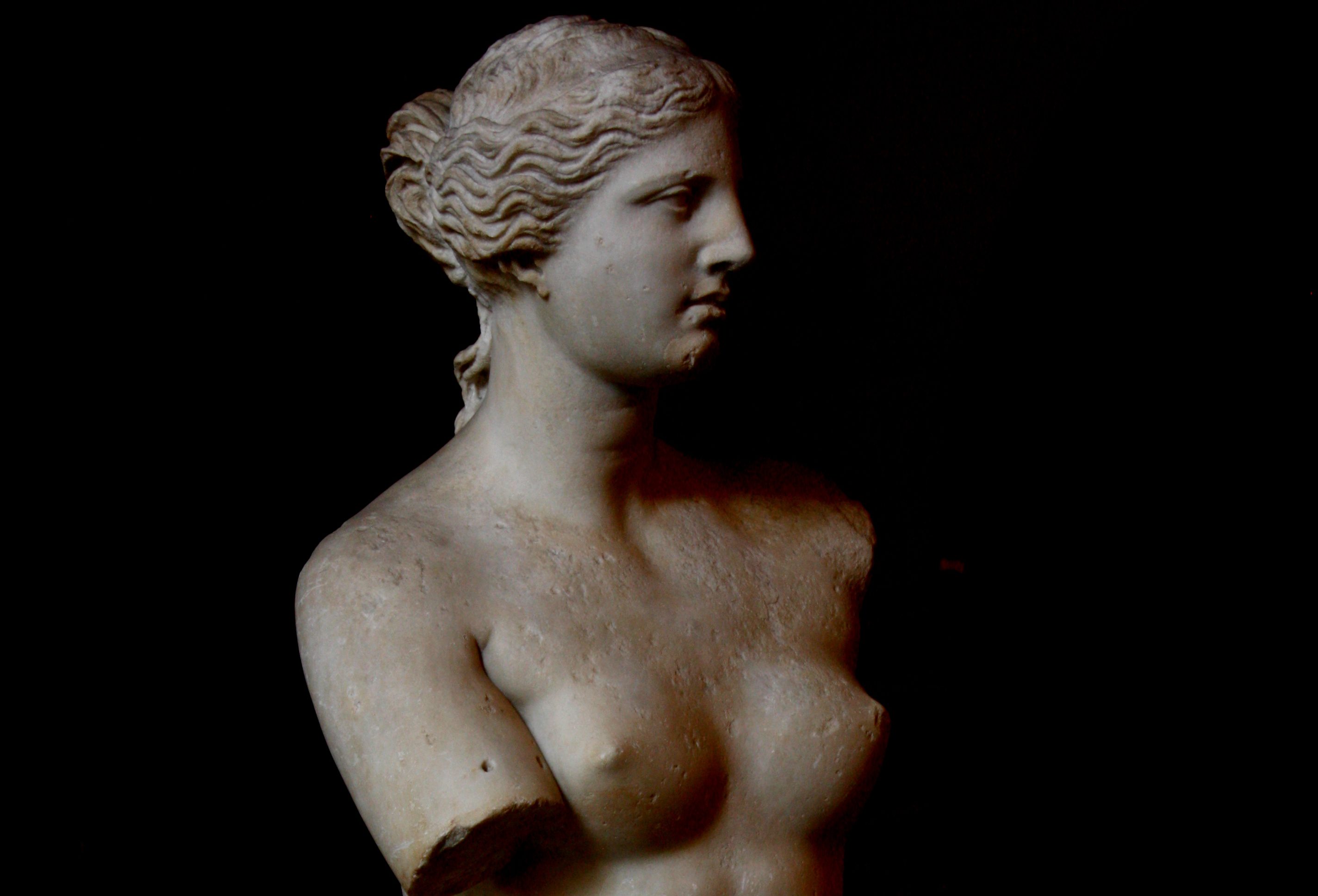
When Francis Fukuyama published his first big book, he eloquently spoke of the protracted stabilities of the liberal order and the psychological beatitude that comes from liberalism’s acknowledgment of the preciousness of life and the dignity of each human being. But Fukuyama’s attachments to the liberal project came couched in a political agenda that turned his conception of what liberalism (or liberal democracy) is into the ideological equivalent of the Venus de Milo: an idealized, mutilated statue that becomes the vantage point from which is enunciated a triumphalist narrative that understands liberalism’s endurance to be nothing less than the meaning of the end of history. A strange attractor, to use the language of chaos theory, becomes the absolute terminus of political creativity.
And one could hazard that perhaps Fukuyama is right. Even today, despite the fits modern peace has suffered, our illiberal age has reactivated a sense of political commitment to foundational liberal values and produced electorates that have recently voted to oust authoritarians in Hungary, Serbia, Brazil, and now the United States. This commitment has led to some chatter, perhaps in light of the recent ascendance of democratic socialists, that it is liberalism to which we must now rally with the fervor and will that characterize all great political movements. Liberalism qua liberalism is the political self-consciousness that these chatterers would argue offers both the intellectual and ideological toolboxes to ferry the ambitions of those who seek to reconstruct America after its dance with Trumpist populism. For this reason, they find in Fukuyama an influential theoretical ally.3 But consideration of how Fukuyama’s political commitments at the time filtered into his hypothesis is often missing, as is any consideration of the theoretical consequences of that commitment. In fact, the more I’ve thought about Fukuyama, the more I’ve realized that it is his vision of liberalism, which many liberals and neoconservatives have accepted and even promoted as policy and which takes itself almost as an eschatology, requires cognitive bracketings of a kind that could only be done precisely because one is not a proponent of liberal democracy. Can we say that the United States was a liberal democracy in 1776? Before 1865? Before 1920? Before 1965? What is precisely liberal in a British Empire or, more generally, how is “liberal imperialism” even possible as a concept?4
Fukuyama gives these questions short shrift in The End of History and the Last Man, where, in the American context, he recognizes that even though full suffrage was only gradually implemented, meaning that for much of its history the United States was not a country in which all its citizens were able to vote, the country “could meaningfully have been spoken of as [a] democrac[y] before that point [of full suffrage].”5 But how? In 1918, if women could not vote and African Americans lived in terror of lynchings in the South, how is this meaningfully democratic? Again, what bracketing does Fukuyama expect us to execute, and why does this bracketing feature so early in his text? Surely, wealthy white men lived in a paradise of liberalism, enjoying the boons of the liberal revolution as America industrialized and built a legal regime to promote free markets, but was not belief in this idea made possible by a primary exclusion that tarnished any pretensions it may have had in its promise of freedom for all?6
At a certain point, it began to seem to me that there really was no point at which liberalism had ever looked better than it did now, or at least as it must have looked to Fukuyama in the 1990s as Europe united, the Soviet Union dissolved, and the Eastern Bloc rested for the first time since the rise of twentieth-century totalitarianism. Maybe there was something to Fukuyama’s claim that we had become post-historical last “men,”7 more worried about economic charts than Universal History and bloody battles. Thus, today’s liberalism became rainbow Absolut vodkas and reality TV, micropolitical and identitarian self-assertion, transfers of entire labor forces across global markets, and the financialized digitization of everything from sexual fetishes to medieval manuscripts. Certainly, there were financial crises, political scandals, and indeed, a genocide in the Balkans. But the West continued to consume and to live, as always, morally disturbed by human weakness and its perpetual propensity for evil, but no depravity could dislodge the euphoria at the collapse of communism and the rise of a new techno-frontier ready to be conquered by a new type of American: the whiz kid.
This liberalism was “healthy.” Or even better, it was triumphant. For Fukuyama, liberal democracy was the end of history insofar as it represented “the end point of mankind’s ideological evolution.”8 So why the malaise today? In 2019, Fukuyama wrote a second afterword to his famous book in which he observed that it is populism’s ascendance that will once again test whether liberal democracy really is the end of history.9 And, of course, observing the persistence, if not electoral success, of populist parties in Italian, German, French, Spanish, British, Hungarian, Polish, Turkish, and American elections in the past decade, one can think that an illiberal age has arrived.
What was it contesting? Why use the term “illiberal”? Does not the fact that the term is negative—what is not liberal—betray the supremacy that the liberal idea has enjoyed for the past century, almost in the same way that, in the legal world, liberal and Left legal thinkers, in their resorting to the term “non-originalism” to counter originalism, betray how institutionally dominant the latter idea has become even if it is the legal ideology of a minority in the profession? What even is liberalism?
A full answer is beyond the scope of this piece, but we could make some small provisional statements. The writer and journalist Edmund Fawcett defines liberalism not by providing a rigid set of characteristics but by sketching out “four guiding ideas.” Those ideas are that: (a) conflict is endemic to human life and could be managed by treating society as a “field of peaceable competition”; (b) concentrated power, whatever its form, should be distrusted; (c) progress is good; and (d) the state should be limited in its treatment of the people who are endowed with the right to be respected.10 In addition, and perhaps more importantly, Fawcett moves any attempt to concretely define liberalism into the realm of pragmatics, calling liberalism a “sub-practice”: “As politics is a practice, liberalism strictly is a sub-practice or the practice of a practice.”11 But how do I know that what I do is liberal? Fawcett’s definition becomes circular: the liberals are “the men and women who have engaged in, voted for and thought about liberal politics.”12 If you wanted “a satisfying, non-circular definition of ‘liberalism’ . . . none is available.”13 The problem gets hairier because, as Fawcett notices, many liberals do not call themselves liberal and certain illiberals do.14 And even if one does declare oneself a liberal, immediate ideological tensions arise as the liberal negotiates whether their version will privilege resistance to state power or the antagonisms of market forces. Fawcett concludes that ideational tension might actually be constitutive of liberal ideology and “acceptance of tension and conflict among [liberals’] own guiding ideas was itself characteristically liberal.”15 In a move that would have made Hegel smile and goes totally unnoticed by Fukuyama, Fawcett makes ideational contradiction paradigmatic of the liberal.
But the problems of definition run far deeper because what is at its core a contradictory political philosophy or practice becomes a program; it becomes a target or endpoint of a particular politics. The problems are, for example, in Fukuyama’s triumphalism, in the way that historical eventuality convinced him to claim victory for a liberalism that his text does not qualify as having changed as history progressed. This insight came to me as I watched Kane Parsons’s Backrooms. The film portrays a systemic anxiety: a gnawing worry that life in its brute, obdurate reality is not very real. Clark, the California furniture store owner and failed architect, and Mary, the therapist who sells her self-help books via infomercial, are deeply unhappy people. When they encounter the labyrinthine backrooms, the question of existence becomes pressing for them, which is strange because if anything haunts the backrooms, it is their emptiness.16 There is nothing in there but the angular space of the middle America office suite. What populates the backrooms is the residue of reality: traces of objects, signs surreally inverted. The anxiety it portrays is an anxiety—or maybe fascination, the anxiety that is secreted by fascination—over what Jean Baudrillard called the hyperreal.
As I will explain in Part II, Baudrillard uses “hyperreality” to denote a contemporary reality dominated and determined by simulation.17 Our reality, according to Baudrillard, is submerged in an ocean of sign circulation that untethers the referential possibility of the sign or, to put it differently, how the sign itself makes meaning.18 The product is a phenomenological experience wherein we are fascinated by signs, though we are unable to attach meaning to them. Thus, our fascination with the regime of signs is greater than the meaning we derive from our interaction with the real world, and we thus integrate ourselves into the accelerated flux of semiotic exchange. We ourselves become hyperreal. In Parsons’s Backrooms, the two main characters are trapped in a surreal labyrinth where all they can do is circulate within it. They run in it, are chased in it. There is no cause or origin to the backrooms. They are just there. And the objects and literal signs (one of them is a stop sign, except the letters are reversed as if looked at in a mirror) that populate it are so disjointedly presented, so odd their surroundings, that they themselves, qua signs, become surprisingly noticeable.19
Baudrillard’s mantic writing style and his frankly shocking, nearly reactionary opinions aside,20 Baudrillard produced a vocabulary to describe a certain liberal subjectivity. For Fukuyama, the “Spirit of 1776”21 seems not to have changed in nature as history progressed, so it follows for him that 1776 is a watershed point, and the type of liberal democracy the United States then represented would spread as the world modernized. For Fukuyama, policy differences between, say, New Deal Keynesianism and Reaganite neoliberalism seem incidental. They are at least not worth mentioning in The End of History. The implication is that there can be variation in policy emphasis across liberal democratic systems without those variations disturbing the nature of liberal democracy.22
For Baudrillard, this is intolerable since it is precisely within liberal democracy that the cancer of simulation has metastasized. The Western democracies that Baudrillard finds in the ’80s, ’90s, and 2000s are fundamentally different from those of the eighteenth and nineteenth centuries (again, provisionally agreeing with Fukuyama that the United States was a liberal democracy even in the eighteenth century). Following Marx, Baudrillard points out that the process that culminates in the hyperreal begins with the rise of capital exchange, because the value of a commodity was less in its utility and more in its exchangeability.23 Developed consumer culture, technological advancement, and progress in the medico-surgical fields have fundamentally altered how the Western liberal subject relates to their social environment, to history, and to the political. This is why the liberalism that arrived on the American scene in 1980 with the election of Ronald Reagan and his administration’s amoral pursuit of markets and negative freedom, its ambition to dismantle administrative and tax oversight and to roll back social rights gained through legal and legislative action, accelerated the process that made the American a being of consumption, privacy, and performance. The social collapsed, and the national emerged by way of hyperreal appeals to patriotism. Meaning dissipated as the relation between the American citizen and the nation became one of contractual distance where the state guaranteed security of property and nation but left the answers to all other questions of community, society, and belonging for the citizen to find in their own silos.
Fukuyama believes that if there is alienation in liberal democracy, it is due not to technology or capitalist semiotic acceleration, but to the fundamental “thymotic” contradiction at the heart of liberal democracy, which must balance citizens’ desires for social recognition of their equality (isothymia) with their individual desire for recognition of what makes each superior to the other in one form or another (megalothymia).24
Somewhat surprisingly, on the subject of history’s end, both Baudrillard and Fukuyama end up in rather similar places. The former ends up in a posthistorical hyperreality where the human subject is fusilladed by sign currents that disintegrate the very conditions of the possibility of history. And the latter ends in a posthistorical realm where the subject lives a “completely satisfying” bourgeois life worried perhaps about world tumult but comforted by the fact that, as a post-historical subject, Universal History has nothing else to do with it. No more bloody battles for prestige; no more imperialism; no more radical political experimentation.25
Baudrillard, for all his flaws—and they are many—ultimately offers an alternative account that is less ideologically inflected and more insightful for understanding a phenomenon with which everyone reading this can agree: things don’t seem to make much sense anymore (including liberalism). Fukuyama’s hypothesis, while, at its best, adroit, intuitive, and honest, is at its worst a chimera constructed out of mutilated Hegelo-Kojèvian phenomenology, Straussian shortcuts, facile historical observations, all of which betray an insuppressible neoconservatism, and an ambivalence with regard to the Nietzschean “last man” that, in my analysis, also betrays his commitment to a fundamentally conservative pessimism.26 Indeed, it is with Baudrillard that we can speak at all about the subjective effects of our reality TV president and his verbally diarrheic discourse, which for all its non-sensicality managed to remain efficaciously powerful; social media and its capacity to disturb the very foundations of reality on which any deliberative liberal democracy must rest; foreign states using online discursivities to contaminate the speech in open societies and breed sectarianism therein; the expansion of the field of human rights and what this means for the very concept of Right; and now the advent of artificially intelligent models whose existence, go figure, is precisely semiotic.
This blindness on the part of Fukuyama is catastrophic because it renders his hypothesis unhelpful in providing a structure for thinking about what is salvageable in liberalism for us to defend it against both the lashings of populist hysteria and its own internal tendency to masquerade its favoritism for the rights of the sovereign individual behind abstract humanitarian beatitudes while permitting social ills to fester precisely because state action into these would cut against its dogma. Following Fukuyama, if all we can say is that populism represents a blossoming of megalothymotic pride that liberal democracy cannot contain, then we skirt close to accepting the masculinist framing that, at our core, we want mostly action and competition.
With Baudrillard, we can understand ourselves as subjects in violent relation to signs. They traverse us, and this traversal, this phenomenological experience, produces a human subject entirely different from the abstract assumptions that the objective-in-intent fields of economics, law, and political science make when they theorize human conduct with concepts like the “rational investor” or the “reasonable person.” By understanding Baudrillard, we may learn how to interrupt our frenetic, evanescent, anesthetized lives. We may learn how to make that cut in the chain of signs which structures our everyday experience. And we may revive Hegel’s timeless importance as a thinker of the self, the social, and the state, and thus resuscitate him from the soundbite he has become in Fukuyama’s work.
The ultimate goal with this and the next two pieces is not to promote the Baudrillardian position exclusively, nor even the Hegelian, but to help turn the page on a triumphalism that seems to be returning in intellectual liberal circles and which perhaps may find once again in Fukuyama a haven for its intellectual activity now that he has written a new memoir and recent events show that the grip of populism is weakening.27 As I will explain in Part III, that triumphalism is a core product of a hypothesis belied by fundamentally illiberal precepts and an act almost of high treason against the Hegelianism that Fukuyama continues to suggest structures and supports his thought.28 Hegel was a liberal thinker insofar as his philosophy is a philosophy of freedom. But Hegel is also a philosopher of the human subject as it enters, thrives, and finds its being in society. Hegel is a philosopher of duty and desire; he is a philosopher of the state and of right. Very little of this appears in Fukuyama’s End of History. His Hegel is a Hegel of recognition. Fukuyama, like Kojève, takes an early episode of the Phenomenology of Spirit and magnifies it until it becomes almost the first chapter of actual history, a primordial memory that casts a shadow over every struggle between the proud and the meek. Hegel is universally greater than that particular episode. For he was, in the end, not just the philosopher of recognition, of desiring the other’s desire, of being seen, but also the philosopher of Spirit, of the absolute consciousness in which I find myself in the other and the other in me.
Notes
- This article is the first part of a three-part sequence that challenges Francis Fukuyama’s hypothesis about the “end of history.” Part I is introductory. Part II will employ Jean Baudrillard’s theory of hyperreality to foreground concepts and themes that Fukuyama overlooks and which defeat the triumphalism of his hypothesis. Part III will interrogate the degree to which Fukuyama’s claimed allegiance to G.W.F. Hegel through Alexandre Kojève is authentic and will suggest that Fukuyama’s real concern is Nietzsche; Hegel and Kojève act as a “screen” that
permits Fukuyama to make Nietzsche contemporaneously relevant. ↩︎ - As Edmund Fawcett puts it, “Dream and nightmare, success and wreckage mark the liberal story and, with them, wide swings of mood: politically, from over-confidence to self-doubt; intellectually, from unbounded universalism to worldly-wise damage limitation.” Edmund Fawcett, Liberalism: The Life of an Idea (Princeton: Princeton University Press, 2018), 7. ↩︎
- Of course, an easy relationship with Fukuyama for any progressive liberal might be difficult given Fukuyama’s views on what I would argue is the civil rights frontier today: transgender rights. Already, here some writers have begun striking back, even though they remain willing to accept Fukuyama’s triumphalism. See Silvaria Lysandra Zemaitis, “The Final Struggle for Equal Recognition,” Liberal Currents, https://www.liberalcurrents.com/the-final-struggle-for-equal-recognition/; Katherine Alejandra Cross, “Fukuyama’s Glasses,” Liberal Currents, https://www.liberalcurrents.com/fukuyamas-glasses/. ↩︎
- See Fawcett, Liberalism, 29. ↩︎
- Francis Fukuyama, The End of History and the Last Man (New York: Free Press, 2019), 365n6. Strangely, my personal copy of the text does not show that it seems to be the third edition of the book. The book was first published in 1992. In 2006, the book was re-published with a new afterword, and in 2019, an afterword to the 2006 afterword was added. ↩︎
- For historical examples of the “bracketing” refered to above, see Bernard Baylyn, The Ideological Origins of the American Revolution, 3rd ed. (Cambridge: Belknap, 2017), 238: Connecticut Reverend Stephen Johnson preached in 1765 against the injustices of slavery and for his sermons drew examples from Europe but not from the much closer plantations of the South. Baylyn provides a now-classic account of the way the rhetoric of freedom featured in pre-Revolutionary debates over American independence. See ibid., 232–246. ↩︎
- The gendered nature of Fukuyama’s term is explicit, and Fukuyama at no point addresses whether his speculations about the last man are exclusively the purview of men and do not include women. His statements are general enough that one can read “man” to mean “human,” but considering the Nietzschean origin of the concept and Nietzsche’s views on women, to read man to include woman would be an act of high naiveté and stupendously anachronistic. ↩︎
- Francis Fukuyama, “The End of History?” The National Interest (Summer 1989), https://pages.ucsd.edu/~bslantchev/courses/pdf/Fukuyama%20-%20End%20of%20History.pdf
↩︎ - Fukuyama, End of History, 357. ↩︎
- Fawcett, Liberalism, 7–11. ↩︎
- Fawcett, Liberalism, 26. Notice how this idea of liberalism as being more akin to a practice is somewhat similar to intellectual “positions” that do not crystallize into “isms” or ideologies like phenomenology or psychoanalysis. As Jacques Lacan put it, “A structure is constitutive of the praxis known as psychoanalysis.” Jacques Lacan, Écrits (New York: Norton, 2006), 671. There is, thus, no “phenomenologism” or “psychoanalism” insofar as both of these are strictly methods or forms of intellectual activity. ↩︎
- Fawcett, Liberalism, 27. ↩︎
- Ibid., 22. ↩︎
- Ibid., 16. Flávio Bolsonaro’s Liberal Party of Brazil, for example, was once a center-right political party catering to business interests with its emphasis on economic liberalism, free markets, and diminished state presence in economic affairs. In recent years, the party has become inflected with the far-right populism and nationalism that propelled the Bolsonaro family into spectacular fame or infamy. https://brasil.vota.com/en/parties/liberal. ↩︎
- Ibid., 22. ↩︎
- Of course, there is an “entity” there which provides the film with a superficial scare factor but its meaning to the film is in what it psychologically represents. The film, I would argue, is actually cheapened by the addition of this creature, whose purpose is more to give us a sense of plot cohesion than it is to further the abyssal horror that the backrooms themselves represent. ↩︎
- Jean Baudrillard, Simulacra and Simulation, trans. Sheila Faria Glaser (Ann Arbor: Michigan University Press, 2021), 1. ↩︎
- Ibid., 2. ↩︎
- One remembers here the Russian formalists who promoted the “unfamiliarity” of literature as a way to exalt the reader into a higher consciousness. “[A]rt exists that one may recover the sensation of life; it exists to make one feel things, to make the stone stony. The purpose of art is to impart the sensation of things as they are perceived and not as they are known. The technique of art is to make objects ‘unfamiliar,’ to make forms difficult, to increase the difficulty and length of perception because the process of perception is an aesthetic end in itself and must be prolonged. Art is a way of experiencing the artfulness of an object; the object is not important.” Victor Shklovsky, “Art as Technique,” The Critical Tradition: Classic Texts and Contemporary Trends, 3rd ed. (Boston: Bedford/St. Martins’s, 2007), 778. ↩︎
- Steven Best and Douglas Kellner call Baudrillard’s style a “pre-modern neo-aristocratic aestheticism dedicated to idiosyncratic modes of thought and writing with frequent lapses into conservative thought.” Steven Best and Douglas Kellner, Postmodern Theory: Critical Interrogations (New York: The Guilford Press, 1991), 126. Kellner is no less reserved in his characterization of Francis Fukuyama as a “State Department ideologue.” Douglas Kellner, “Theorizing the Present Moment: Debates between Modern and Postmodern Theory,” Theory and Society 28, no. 4 (1999): 643. ↩︎
- Fukuyama, End of History, 4. For Fukuyama, in fact, the meaning of the “Spirit of 1776” is nothing less than the moment in American history where “[t]he very distinction between masters and slaves was abolished, and the former slaves became the new masters—not of other slaves, but of themselves.” Ibid., 200. That the white slave-owners promoting revolution against Britain were, of course, using the rhetoric of slavery and freedom ironically is not worth a comment. ↩︎
- See ibid., 347. ↩︎
- “If commodities could talk, they would say, ‘Although our use-value may interest people, it doesn’t belong to us as things. What does belong to us as things is our value. How we interact as commodity things proves that this is so. We relate to one another only as exchange-values.’” Karl Marx, Capital: Critique of Political Economy Volume I (Princeton: Princeton University Press, 2024), 59. ↩︎
- Fukuyama, End of History, 190. ↩︎
- See Patrick Bratlinger, “Apocalypse 2001; Or, What Happens after Posthistory?” Cultural Critique, no. 39 (1998): 59 (distinguishing Fukuyama’s end of history from Baudrillard’s end of historiography). ↩︎
- See also Robert John Parkes, “Chapter Three: At the End of the Grand Story,” Counterpoints 404, Interrupting History: Rethinking History Curriculum after “The End of History” (2011): 43. ↩︎
- See Francis Fukuyama, In the Realm of the Last Man (New York: Farrar, Straus, and Giroux, 2026). ↩︎
- See, e.g., Fukuyama’s interview with Ezra Klein, which, richly, is titled “Was Fukuyama Right All Along?”. ↩︎
Leave a Reply